
10 Simple Ways to Infuse Mindfulness into the School Day for Student Well-being

As a teacher, you know how important it is to create a positive learning environment that supports the social and emotional well-being of your students.
One way to achieve this is by infusing mindfulness into the school day.
Mindfulness practices in the classroom have been shown to improve student well-being, self-regulation, and academic achievement.
In this article, we’ll explore 10 ways to cultivate mindfulness in the classroom, promote emotional self-regulation, and support your students’ social and emotional learning (SEL).
Get Your Free Breathing Exercises & Mindfulness Activities Ebook
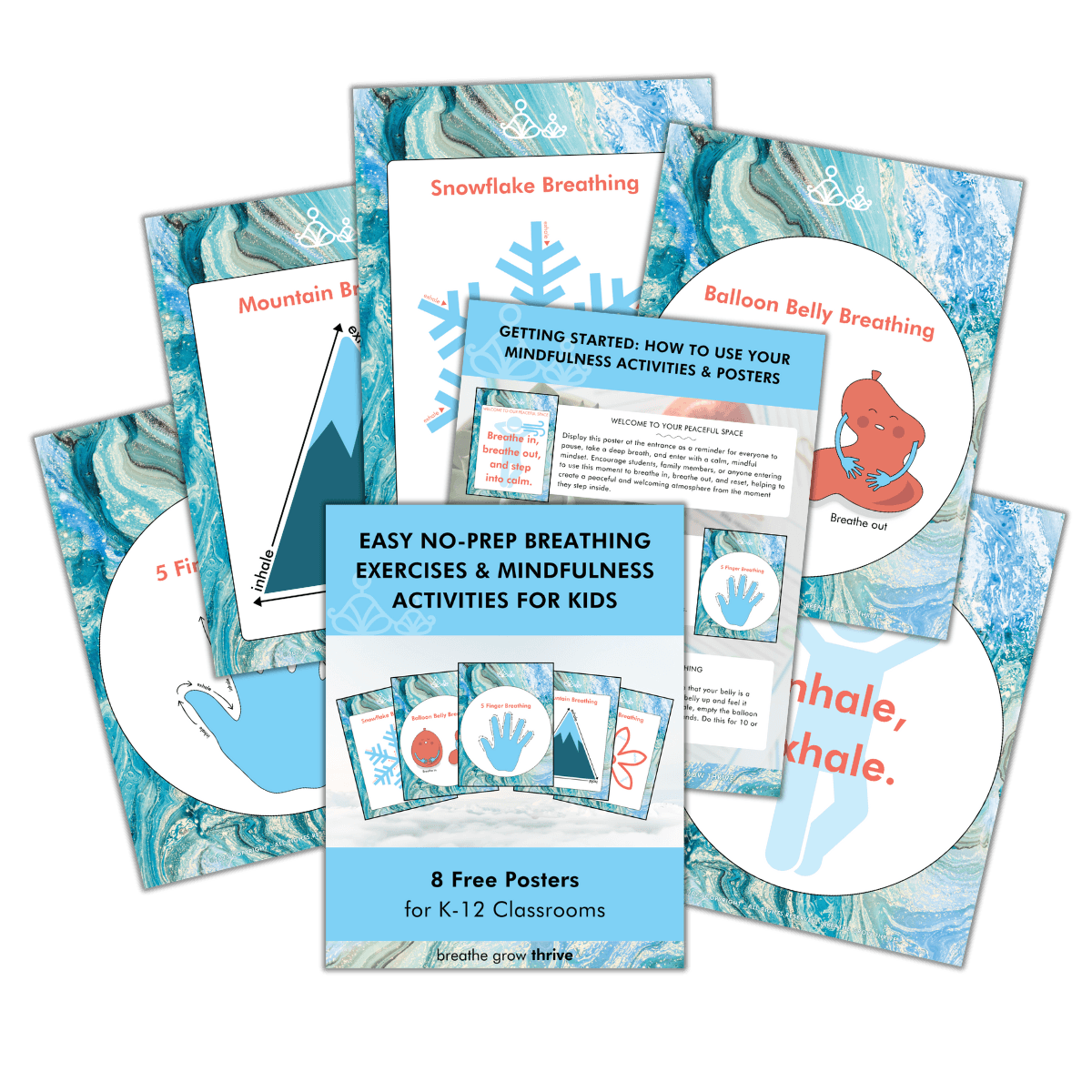
Help your students (and yourself!) stay calm, focused, and self-regulated—with just a few minutes of breathing exercises each day.
8 beautiful, ready-to-print posters for easy classroom integration
No prep required—just download and get started
Evidence-based strategies to reduce stress and promote emotional well-being
No prep. No stress. Just download and start creating a calmer, more focused classroom today.
1. ATTACH TAKING A MINDFUL BREATH TO A CUE
A simple way to integrate mindfulness is to link a mindful breath to a classroom cue.
For example, after students transition to their spots, take a big collective inhale and exhale together before starting the next activity.
This moment helps calm the mind, focus attention, and reduce stress at key points in the school day.
2. PRACTICE MINDFUL EATING
Snack time can be an opportunity for mindfulness!
Encourage students to eat slowly, noticing texture, taste, smell, and colors in their food.
Mindful eating fosters gratitude, awareness, and a sense of calm, while helping students slow down and appreciate the present moment.
3. MINDFUL WALKING
Walking around the classroom or school can also be a mindfulness practice.
Ask students to notice the soles of their feet on the ground, the rhythm of their steps, and how their body moves.
Mindful walking grounds students in the present moment, reduces anxiety, and helps improve attention.
4. SUN BREATHING
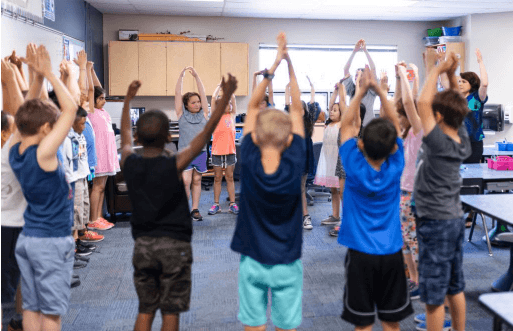
Between lessons or during transitions, encourage students to stretch their arms up as they inhale and lower them slowly as they exhale.
Repeat 5 times. This practice energizes the body, releases tension, and promotes relaxation, making it perfect for a quick reset during the day.
5. MINDFUL COLOURING
Colouring is more than just a quiet activity, it’s a proven mindfulness strategy!
Early finishers or students needing a reset can use mindful colouring sheets like My Calm Place from the SEL & Mindfulness Foundations Program.
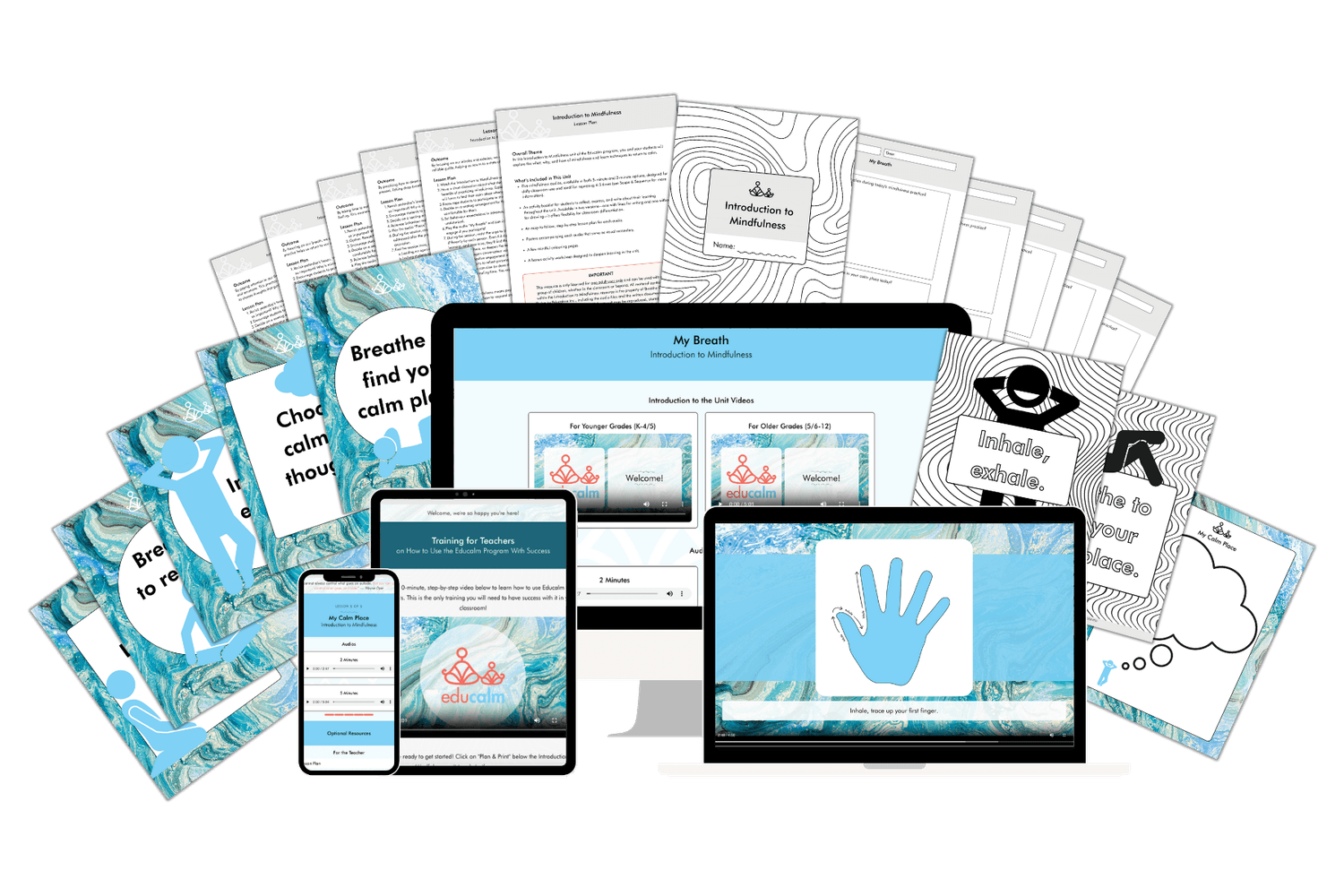
Mindful colouring reduces stress, improves focus, and gives students a creative way to self-regulate.
You can also grab free mindfulness colouring pages + mindfulness posters here!
6. MOOD CHECK-INS
Pause and check in with your students’ emotions.
Have them use their fingers to rate their mood from 0 (low energy) to 5 (high energy). Then, guide them through a short mindful activity to help them feel ready to learn.
These check-ins build self-awareness and emotional regulation skills while fostering a supportive classroom culture.
7. LISTEN MINDFULLY
Play a chime, triangle, or tone bar and have students close their eyes and listen until the sound fades. Once it’s gone, they can raise their hand.
This simple practice develops focus, listening skills, and calm attention, and can become a quick reset during busy classroom days.
Grab our free, ready-to-use printable Breathing Posters ebook for the classroom.
8. SMELL MINDFULLY
A pleasant scent, like essential oils, a flower, a book, or even snack items, can shift students’ focus and promote calm and grounding.
Encourage them to notice how each scent makes them feel and discuss it as a group.
Mindful smelling connects senses and emotions, supporting self-regulation.
9. CALM BREATHING
Deep, slow breaths are one of the simplest ways to regulate emotions and calm the nervous system.
Place one hand on the heart, one on the belly, and breathe slowly 5 times.
Calm breathing can be used at the start of the day, during transitions, or anytime students need a reset to improve focus and readiness for learning.
10. START CLASS WITH A POSITIVE STATEMENT (AFFIRMATION)
Affirmations are positive, present-tense statements that set a calm, confident tone. Begin class together with statements like:
“I am calm, focused, and ready to learn.”
This small routine fosters a positive classroom mindset, builds confidence, and reinforces social-emotional skills every day.
WHY MINDFULNESS MATTERS
Regular mindfulness in the classroom:
Supports emotional self-regulation
Boosts focus and attention
Reduces stress and anxiety for students and teachers
Builds resilience and social-emotional skills
Enhances academic engagement
By integrating these quick mindfulness practices throughout the day, you’re not only teaching important SEL skills, you’re also creating a calmer, happier, and more productive learning environment.
READY TO START A MINDFUL CLASSROOM ROUTINE?
If you want to bring mindfulness and social-emotional learning into your classroom with minimal prep, our FREE SEL & Mindfulness Foundations Program for K-12 is perfect for you.
This evidence-based program includes:
Over a month of ready-to-use SEL and mindfulness lessons
Activities to build self-regulation, focus, and emotional wellbeing
Support for creating a calm and engaged classroom
Start your free program today and help your students develop lifelong social-emotional learning skills!
Loving this? Save it to Pinterest so you can easily refer back to it during the school week. 📌

Do you have a suggestion for a topic you think we should cover? Email us at hello@breathegrowthrive.com.
If this blog post resonated with you, share it with a teacher friend. Sharing is caring! 🧡
You Might Also Like...

Thrive in a calm, focused, and well-managed K–12 classroom with evidence-based, no-prep resources that fit seamlessly into your busy school day.
NAVIGATE
GET 8 FREE BREATHING EXERCISES POSTERS STRAIGHT TO YOUR INBOX
© 2025 COPYRIGHT - ALL RIGHTS RESERVED
© 2026 COPYRIGHT - ALL RIGHTS RESERVED