
Co-Regulation Strategies for Teacher and Student Well-Being
Plus Teacher Stress Management Techniques

Your teaching to-do list is a mile long. Report cards, evaluations, lesson planning—your mind is a whirlwind of responsibilities. A challenging student situation adds complexity. Plus, balancing professional and personal duties leaves you arriving at school fatigued, stressed, and possibly on the brink of teacher burnout.
Have you ever noticed that in these moments, the challenges presented by your students’ behaviours tend to intensify?
It’s not a coincidence; it’s the interconnected nature of emotions.
EMOTION IS INTERNAL COMMUNICATION
How does stress affect the body?
Emotions serve as internal messengers, facilitating communication between different parts of the body. When thoughts of an overflowing plate trigger stress, your body responds with tension, disrupted digestion, or a release of adrenaline and cortisol hormones. This sets off a feedback loop, with stress messages bouncing between body and mind, trapping you in a cycle of fight, flight, or freeze.
The human body is designed to oscillate between stress and relaxation, but sometimes, we find ourselves stuck in prolonged stress cycles. This is completely normal and can happen to anyone, but in the long term, it can affect our mental health and well-being negatively.
Understanding this, we can focus on monitoring our thoughts and recognizing when we’re caught in the stress cycle. Shifting thoughts alone might not always suffice, especially when deeply entrenched in stress. In such cases, breaking the cycle through action becomes essential—consider it an intervention to disrupt the loop. While a midday forest walk might not be practical on a school day, alternative actions will be explored later in this article.
Get 8 Free Breathing Exercises Posters
EMOTION IS INTERPERSONAL COMMUNICATION
The intricate connection between mind and body is rooted in our neurobiology. Emotion acts not only as internal communication but also as a means of understanding and connecting with others—this is interpersonal neurobiology.
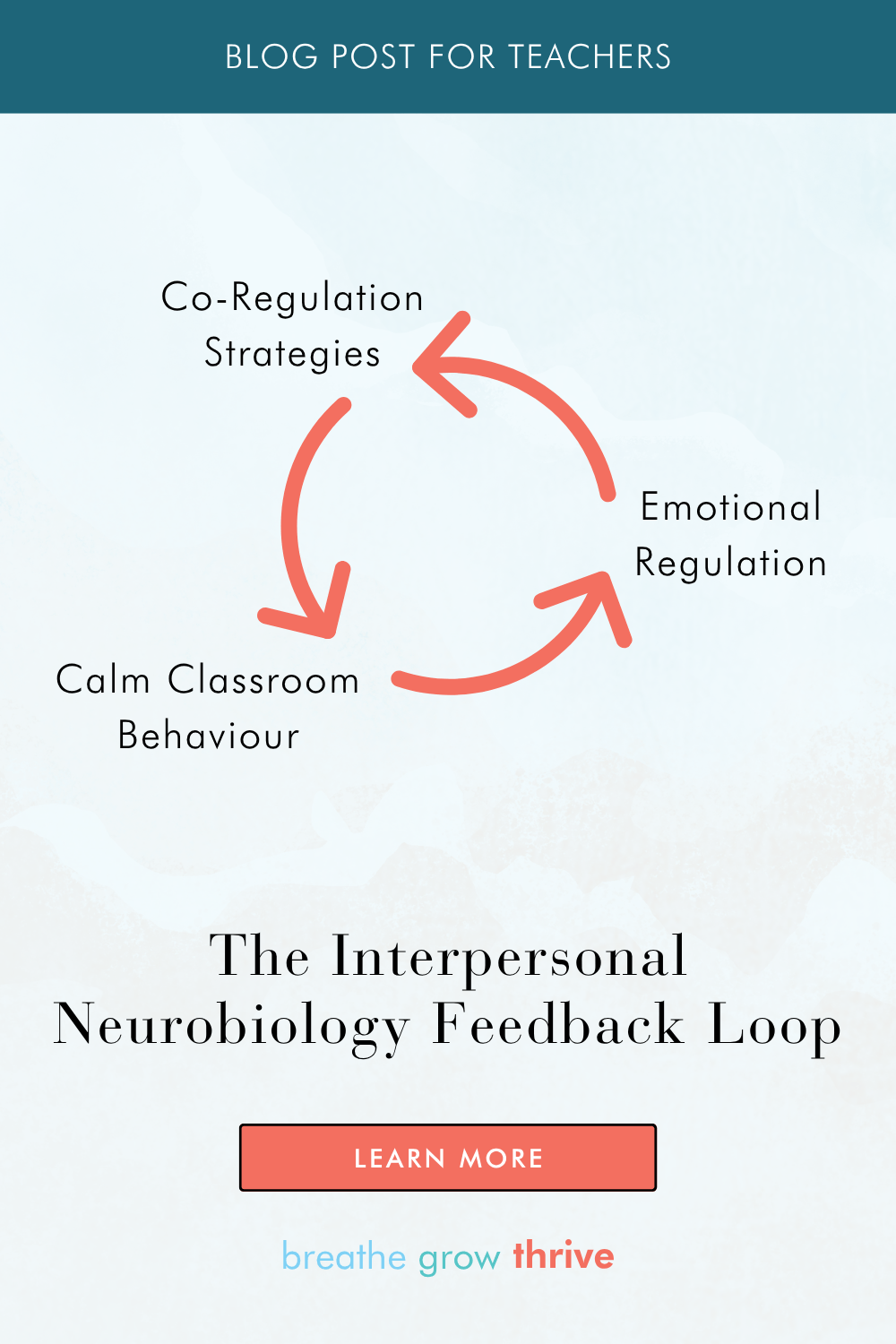
THE INTERPERSONAL NEUROBIOLOGY FEEDBACK LOOP
When teachers arrive at school harbouring stress and overwhelm, students’ brains are wired to pick up on these emotions, initiating a reciprocal stress cycle in their own bodies and manifesting in behaviours like lack of focus, potential conflict, and physical discomfort.
While teachers often interpret these behaviours as challenges, considering the underlying thought-emotion-action cycle can provide a deeper understanding. The students’ dysregulation signifies an ongoing internal dialogue prompting their bodies to enter stress mode and their behaviours to reflect that stressed state.
This cyclic exchange between teacher and student may hinder effective teaching and learning.
Emotions are contagious. Our neurobiology is finely tuned to efficiently decipher others’ emotions through their actions. Body language often speaks louder than words, revealing true emotional states even when verbalized as “fine.”
Hence, when you’re stressed or anxious, students notice and, in turn, exhibit more challenging behaviours. This cycle isn’t exclusive to students; it can emanate from any encounter in your day.
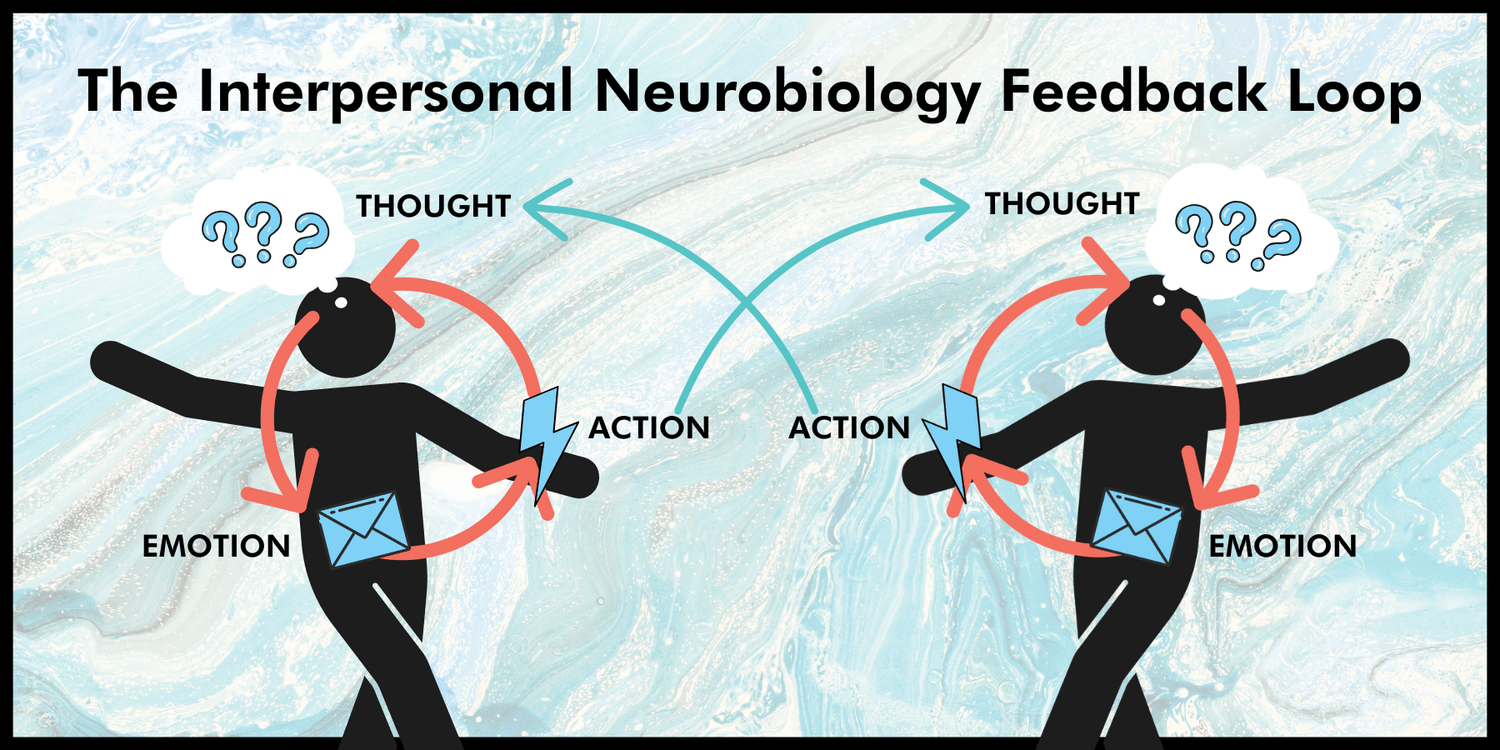
Now, with 25+ students in the classroom, this cycle is much more complex than the example used above. You aren’t the only one sharing their emotional state with others and it isn’t your fault if your students are dysregulated!
But, understanding how emotion is shared in a group empowers us to use it to our advantage and leverage interpersonal neurobiology to create a better learning environment.
Next, let’s learn a bit more on how to prevent teacher burnout, how to manage stress and get ready for effective teaching and learning!
HOW TO PREPARE THE BRAIN AND BODY FOR LEARNING
Recognizing that each student and teacher shows up to school in a different mood, taking proactive actions that aid emotional regulation for everyone is key.
Fostering co-regulation – regulating emotions together – with students becomes crucial. Extending beyond immediate needs, in the long term, co-regulation equips students with emotional self-regulation skills, which also leads to easier classroom management.
Effectively engaging in academics requires a regulated body and mind. Starting a lesson without readiness is a common challenge for teachers facing time constraints and pressures from packed schedules and curriculum demands.
However, it’s crucial to emphasize that overlooking the vital step of co-regulation is a false economy. Unregulated emotions diminish information absorption, compromising learning quality and causing potential frustration for both teachers and students.
Therefore, prioritizing academic content without addressing emotional and regulatory needs first makes the time spent on academics less impactful.
Prioritizing co-regulation is an essential investment, transforming the classroom into an ideal environment for meaningful learning. Efficient emotional regulation maximizes information absorption, optimizing educators’ time and enhancing the overall teaching and learning experience.
Co-regulation doesn’t have to be complicated! Let’s dive into how to easily integrate co-regulation and establish a daily mental hygiene routine in your classroom.
Get Your Free Breathing Exercises & Mindfulness Activities Ebook
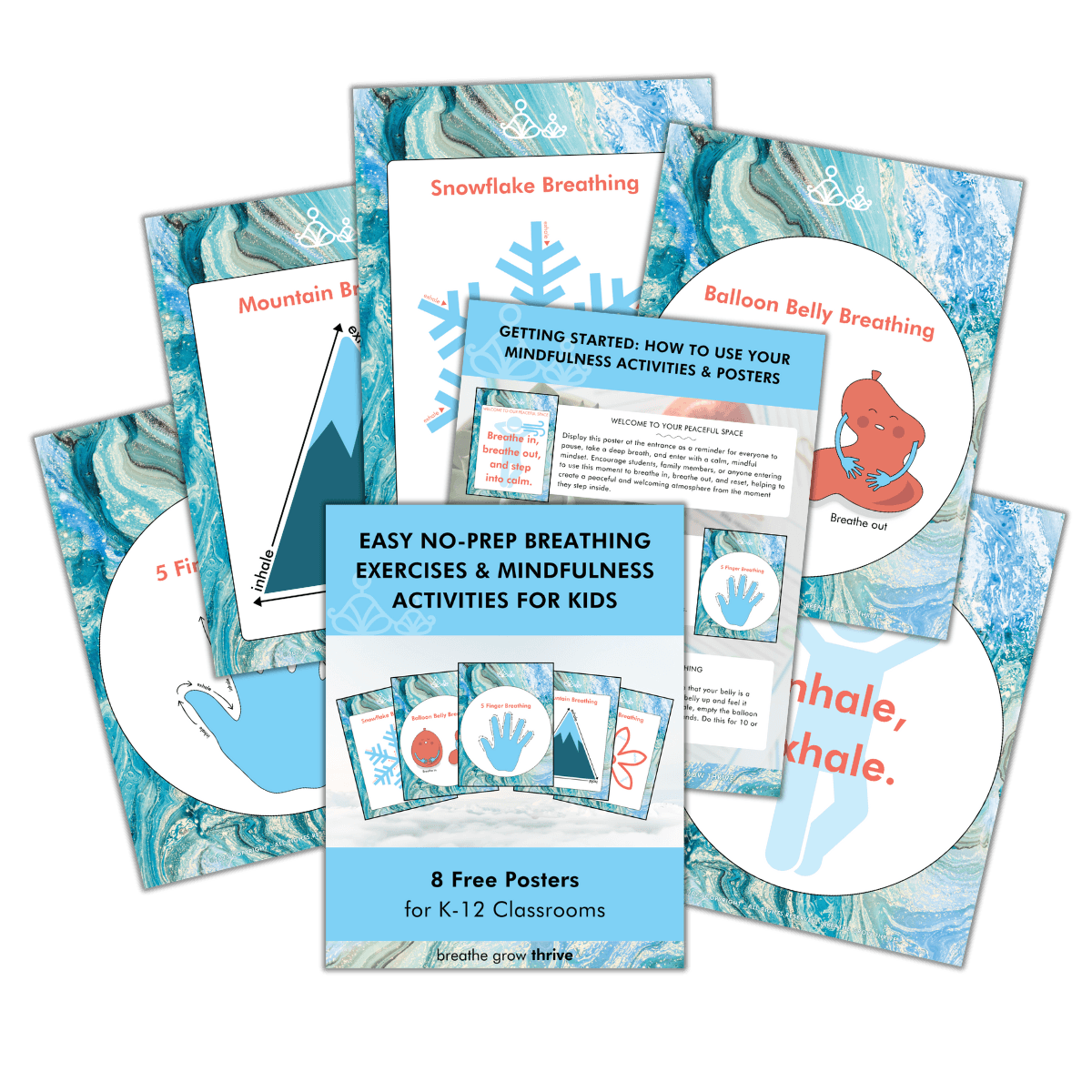
Help your students (and yourself!) stay calm, focused, and self-regulated—with just a few minutes of breathing exercises each day.
8 beautiful, ready-to-print posters for easy classroom integration
No prep required—just download and get started
Evidence-based strategies to reduce stress and promote emotional well-being
No prep. No stress. Just download and start creating a calmer, more focused classroom today.
HOW TO PRACTICE CO-REGULATION
First, select a specific time in the school day to incorporate co-regulation into your routine. Add it to your schedule, whether at the start of the day, after lunch, or during transitions. Consistency is key; establishing a daily routine helps students anticipate and value this dedicated time for emotional well-being.
Begin with once a day, and as the routine becomes established, consider increasing the frequency as needed.
Second, practice co-regulation with simplicity in mind. Choose easy-to-implement, ready-to-use resources, keeping activities brief—ideally under 5 minutes—to fit into the school day seamlessly.
Success hinges on routine and repetition. Commit to practicing a selected co-regulation strategy for one week to one month, before moving on to the next, allowing students to solidify the strategy in their regulation toolboxes for lasting benefits.
Remember, active teacher participation is essential in co-regulation exercises.
Now, let’s explore three effective co-regulation strategies to integrate into your daily routine with your K-12 students:
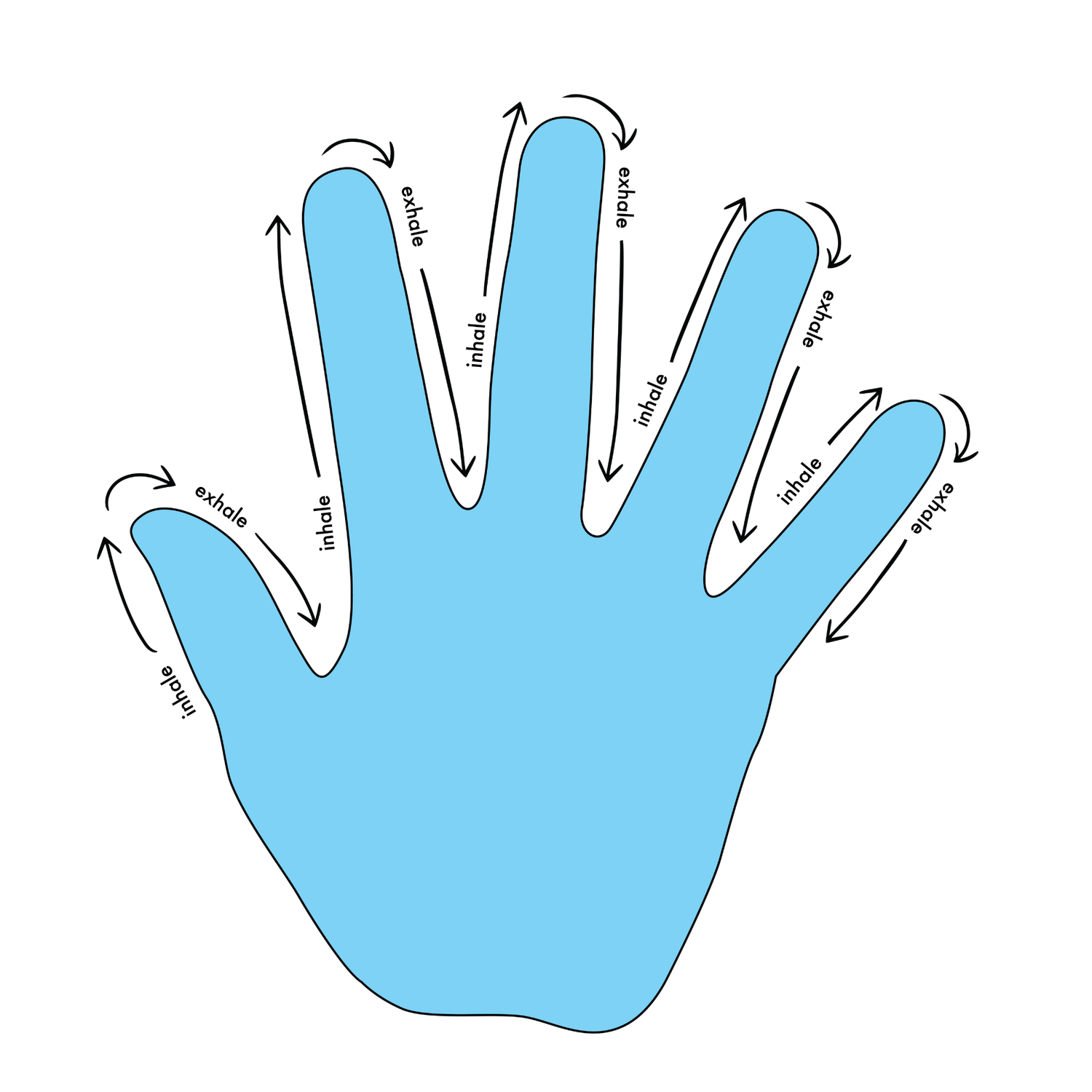
5-FINGER BREATHING:
A great breathing exercise to practice at the desk! Trace the outline of your hand with the opposite pointer finger, synchronizing the movement with deep, intentional breaths. Encourage mindfulness with this method!
BALLOON-BELLY BREATHING:
Guide your students to place their hands on their bellies and to take deep breaths, imagining their belly as a balloon inflating on the inhale and deflating on the exhale. Balloon-belly breathing promotes relaxation and a sense of calm.
GUIDED AUDIO CO-REGULATION PRACTICES:
Leverage the resources provided by Breathe Grow Thrive. Utilize our guided audio sessions, designed specifically for co-regulation. These allow both students and teachers to engage in calming exercises together.
Experiment with co-regulation strategies to discover what resonates best with your students.
Recognize that not all students may participate in every exercise, and that’s okay. Even if they choose not to join in, they will still benefit from the calming shift of the group’s energy.
With time, you’ll notice how your co-regulation tools will also become one of your most effective classroom management strategies!
HOW TO DEAL WITH STRESS IN YOUR CLASSROOM
Teaching is beautiful, meaningful work.
And some days, it’s overwhelming.
At Breathe Grow Thrive, we’re here to make sure you never feel like you have to choose between being a great teacher and taking care of your own well-being.
We support educators in building calm, connected classrooms where everyone, students and teachers, can thrive. And we know the secret isn’t more strategies, more behaviour charts, or more things on your plate.
It’s simple, consistent, evidence-based routines that help everyone regulate, refocus, and feel safe to learn.
That’s why we created Educalm: Our daily SEL & mindfulness program used by thousands of teachers and students in K-12 classrooms.
Educalm guides you through short, meaningful co-regulation practices so that you and your students can breathe, reset, and come back to learning — together.
As one teacher shared:
“Words cannot express how grateful I am to have discovered Educalm. So many students have experienced traumas that nobody should ever endure. Self-regulation is a must, and this has helped our class so much.”
When you feel supported, your students feel it too.
Calm teachers create calm classrooms, and learning grows from there.
TRY IT FOR FREE WITH SEL & MINDFULNESS FOUNDATIONS FOR K-12
To help you get started with ease, we created a free month-long introductory program that gives you everything you need to build a daily SEL & mindfulness routine — no prep needed.
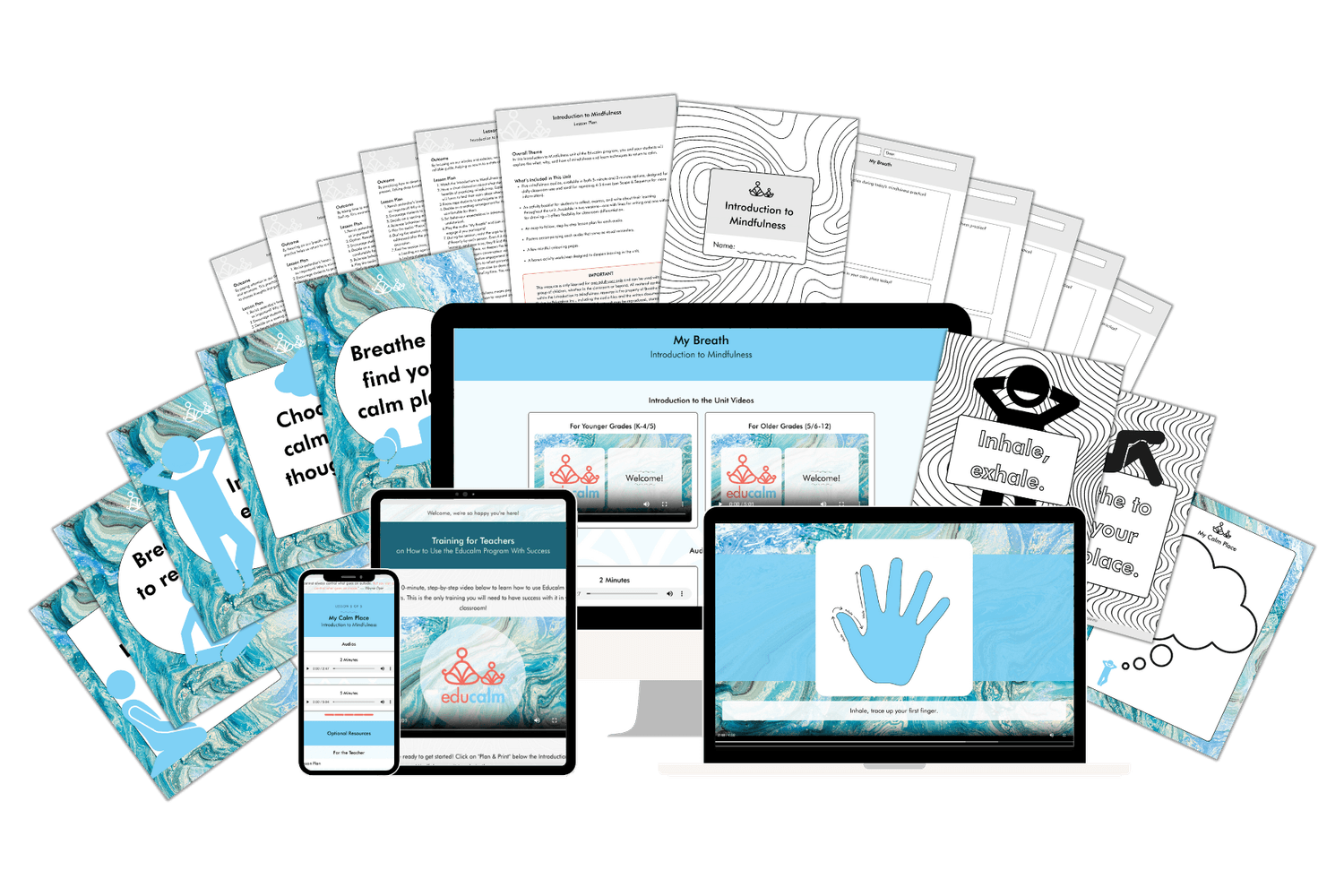
Inside, you’ll get:
The Introduction to Mindfulness unit (1 month of done-for-you lessons)
Daily guided audios + printable resources
A simple routine that strengthens focus, emotional intelligence & self-regulation
Tools that support your calm, too — not just your students
This is your first gentle step into a calmer, happier, more focused classroom — with support every step of the way.
👉 Click here to get free lifetime access to SEL & Mindfulness Foundations
Because teaching is tough — and you deserve to feel supported while helping your students thrive.
BRING MORE CALM, FOCUS, AND EASE INTO YOUR TEACHING DAY
As you navigate the natural stress cycle that shows up in every classroom, you get a choice: resist it and push harder, or meet it with tools that support calm, connection, and learning.
Bring ease back into your day with Breathe Grow Thrive—the trusted classroom solution that strengthens well-being and deepens focus for both teachers and students.
👉 Click here to get free lifetime access to SEL & Mindfulness Foundations
Loving this? Save it to Pinterest so you can easily refer back to it during the school week. 📌
Do you have a suggestion for a topic you think we should cover? Email us at hello@breathegrowthrive.com.
If this blog post resonated with you, share it with a teacher friend. Sharing is caring! 🧡
You Might Also Like...
Thrive in a calm, focused, and well-managed K–12 classroom with evidence-based, no-prep resources that fit seamlessly into your busy school day.
NAVIGATE
GET 8 FREE BREATHING EXERCISES POSTERS STRAIGHT TO YOUR INBOX
© 2025 COPYRIGHT - ALL RIGHTS RESERVED
© 2026 COPYRIGHT - ALL RIGHTS RESERVED